
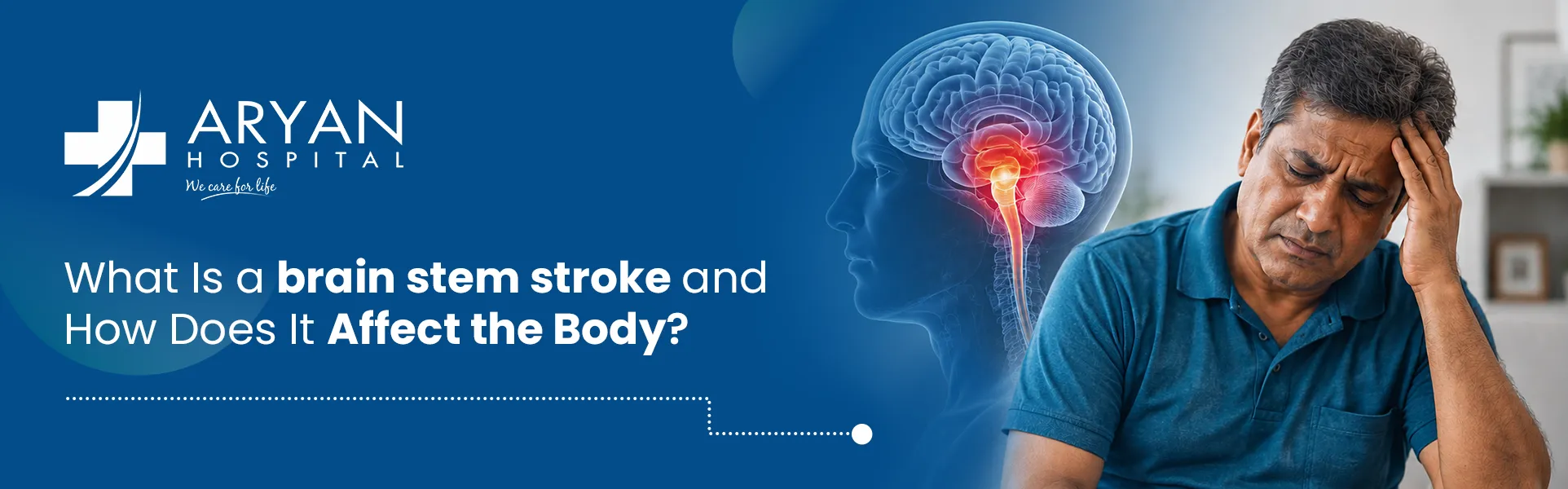
A brain stem stroke is a serious medical emergency that affects the lower part of the brain. This area may be small but it controls many important body functions, including breathing, heartbeat, balance, swallowing, eye movement and communication between the brain and the rest of the body.
Because so many important functions pass through this area, symptoms can appear suddenly and may become severe very quickly. Knowing the warning signs and getting medical help without delay can make a major difference.
What Happens During a Brain Stem Stroke?
A brain stem stroke happens when blood flow to part of the brain stem is blocked or when a blood vessel in this area bursts.
When blood flow stops, brain cells do not receive enough oxygen. They can begin to become damaged within a short time.
There are two main types of stroke:
- Ischemic stroke: A blood clot blocks blood flow.
- Hemorrhagic stroke: A blood vessel breaks and causes bleeding.
Both types need urgent medical treatment.
The symptoms can sometimes look different from those of other strokes. A person may not always have the classic weakness on one side of the body.
Warning signs of a brain stem stroke may include:
- Sudden dizziness.
- Loss of balance.
- Trouble walking.
- Double or blurred vision.
- Slurred speech.
- Difficulty swallowing.
- Weakness or numbness.
- Sudden severe headache.
- Nausea or vomiting.
- Trouble breathing.
- Unusual eye movements.
If these symptoms appear suddenly, emergency medical help should be called immediately.
How Can It Affect Balance and Movement?
The brain stem helps carry messages between the brain and the spinal cord. These messages allow the body to move in a controlled way.
A brain stem stroke can interrupt these signals. A person may suddenly feel very dizzy, lose balance or find it difficult to stand or walk.
Some people may experience weakness on one or both sides of the body. In severe cases, movement may become very limited even though the person remains awake and aware.
This is why sudden balance problems should never be ignored, especially when they appear with vision or speech changes.
How Can It Affect Speech and Swallowing?
The nerves involved in speaking and swallowing pass through the brain stem. Damage in this area can make normal movements of the mouth, tongue and throat difficult.
After a brain stem stroke, a person may have slurred speech or find it hard to form words clearly. Swallowing can also become difficult.
Problems with swallowing can increase the risk of food or liquid entering the airway. Because of this, doctors may check swallowing ability before allowing a patient to eat or drink normally.
Speech and swallowing therapy may later become part of recovery.
How Can It Affect Breathing and Heart Rate?
The brain stem helps control automatic functions that we normally do not have to think about. These include breathing, blood pressure and heartbeat.
A severe brain stem stroke may interfere with these functions. Some patients may have difficulty breathing or may need support in an intensive care setting.
Changes in heart rate or blood pressure can also happen. This is one reason why close medical monitoring is important in the early stages.
Can Vision and Eye Movement Be Affected?
Yes. The brain stem is connected to nerves that control eye movement.
A person may suddenly see double, have trouble focusing or notice that the eyes are not moving normally together. One eyelid may also droop.
Vision symptoms combined with dizziness, weakness or poor balance should be treated seriously. It is safer to seek urgent medical care than to wait and see if the symptoms disappear.
In rare and severe cases, damage to the brain stem may cause a condition known as locked in syndrome.
The person may remain conscious and able to think but most voluntary muscles become paralysed. Communication may sometimes be possible only through blinking or eye movement.
This condition is uncommon but it shows how important the brain stem is for movement and communication.
Several health and lifestyle factors can increase the risk of stroke.
Common risk factors include:
- High blood pressure.
- Diabetes.
- High cholesterol.
- Smoking.
- Irregular heartbeat.
- Obesity.
- Lack of physical activity.
- Heavy alcohol use.
- Previous stroke or mini stroke.
- Family history of stroke.
Managing these risks can help reduce the chance of future problems.
How Is It Diagnosed and Treated?
Doctors may use a neurological examination, CT scan, MRI, blood tests and other tests to understand what has happened.
Treatment for a brain stem stroke depends on whether the cause is a blocked blood vessel or bleeding. In some cases of ischemic stroke, clot dissolving medicine or procedures to remove a clot may be considered when the patient reaches the hospital within the right time window.
Bleeding strokes need a different approach. Doctors may focus on controlling bleeding, reducing pressure and managing blood pressure.
After emergency treatment, rehabilitation may include physiotherapy, speech therapy, swallowing support and help with daily activities.
When Should You Seek Emergency Help?
Do not wait if someone suddenly develops:
- Severe dizziness or loss of balance.
- Difficulty speaking.
- Sudden weakness or numbness.
- Double vision.
- Trouble swallowing.
- Breathing problems.
- Sudden severe headache.
- Loss of consciousness.
Stroke treatment works best when started quickly. Note the time the symptoms began and call emergency medical services as soon as possible.
A brain stem stroke can affect movement, balance, speech, swallowing, vision, breathing and other important body functions. The exact effects depend on the area involved and how much damage has occurred.
Sudden symptoms should always be treated as an emergency because early medical care can improve the chances of better recovery.
If you need evaluation from a neurologist in Gurgaon for sudden neurological symptoms or stroke related concerns, Aryan Hospital can provide medical assessment and suitable care based on the patient’s condition.
Quick action, proper diagnosis and timely treatment are important when dealing with any suspected stroke.